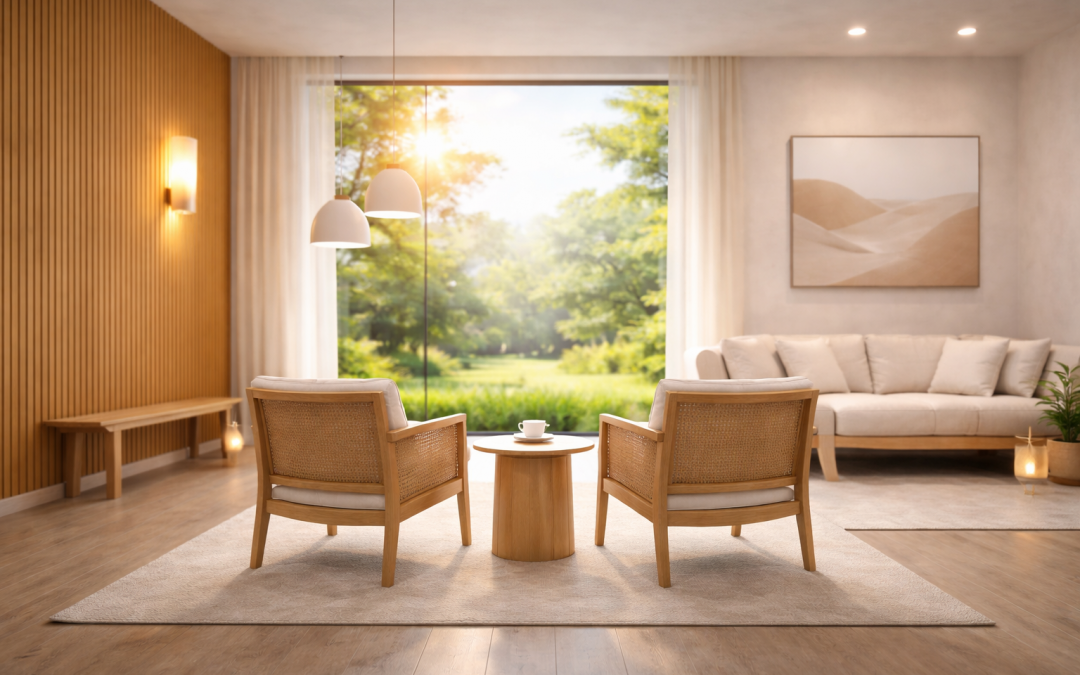
Global Wellness Institute projects that wellness real estate will nearly double from $584 billion to $1.1 trillion by 2029 — making it the fastest-growing sector in the wellness economy. In a recent Country & Townhouse article, author Isabel Dempsey explores the accelerating demand for homes designed around health, sustainability, and performance.
As Dempsey notes, wellness features are no longer optional extras — they are becoming non-negotiable. Post-pandemic awareness has heightened our concern about air quality and immune resilience. Buyers increasingly expect their homes to enhance and support their wellbeing.
Luxury Architect Stefan Pitman offers a grounded reminder that true wellness is not only about spa rooms or biohacking suites. It is about sustainability, low-VOC materials, energy efficiency, proper ventilation, filtration, and buildings that support both human and planetary health.
We spend nearly 90% of our lives indoors. That statistic alone reframes the conversation: the quality of our built environment is a determinant of health and not confined to the luxury market.
Healthy homes contribute to:
-
- Reduced respiratory illness
- Improved cognitive function and productivity
- Lower risk of cardiovascular and neurological disease
- Strengthened immune function
- Better sleep and reduced chronic stress
Wellness real estate, at its best, integrates:
-
- Indoor air quality optimization
- Toxic exposure reduction
- Daylighting and circadian alignment
- Acoustic comfort
- Spatial harmony and biophilic design
The question is no longer whether wellness homes are a trend. The real question is how to move healthy homes and buildings from aspirational upgrades into a mainstream narrative that advocates for more functional and accessible wellness designs.
If wellness is becoming a $1.1 trillion industry, the opportunity — and responsibility — lies in ensuring these principles extend beyond luxury developments and into affordable housing, resilience hubs, and mainstream wellness real estate.
This is where environmental equity intersects with wellness real estate. A healthy home is infrastructure for human thriving.
Core Elements of a Wellness Home
1. Clean Air and Ventilation
- Energy recovery ventilation (ERV/HRV)
- HEPA filtration
- Low-VOC materials
- Real-time air quality monitoring
2. Daylight and Circadian Support
- Abundant natural light
- Skylights and solar orientation
- Circadian-responsive lighting
- Indoor plant integration
3. Thermal and Acoustic Comfort
- High-performance insulation
- Triple-pane windows
- Sound attenuation systems
- Quiet sleep environments
4. Sustainable and Non-Toxic Materials
- Natural materials
- Formaldehyde-free cabinetry
- Sustainable flooring
- Reduced chemical load
Summary
Wellness homes may be emerging as a defining trend in the luxury real estate market, but their importance extends far beyond that. As highlighted by the Global Wellness Institute, wellness real estate is rapidly expanding, reflecting a growing awareness that our homes directly impact our health. With people spending nearly 90% of their time indoors, features like clean air, low-toxic materials, energy efficiency, proper ventilation, natural light, and acoustic comfort are not indulgences — they are foundational to well-being. Healthy homes reduce respiratory illness, improve cognitive performance, strengthen immune function, and support better sleep and stress reduction. Ultimately, wellness housing is not simply a luxury movement; it represents a necessary shift toward designing living spaces that actively protect and enhance human health.