
Vinyl flooring (LVP and tile LVT) is being widely used in residential and multifamily construction. Where it offers a compelling mix of practicality and affordability it also presents problematic health issues for residents.
On the positive side, it is highly durable, water-resistant, and easy to maintain. It is also cost-effective and aesthically pleasing. Installation is typically fast and efficient, helping reduce labor costs and accelerate project timelines. For developers working within tight margins, vinyl is the most common choice because it meets market expectations for appearance and performance while keeping upfront costs low.
However, these advantages come at the expense of our heath and wellbeing. And it points to a larger issue in how we define “value” in the built environment. On a larger scale, it’s an issue of cost of health and wellness.
Ξ
Key Chemicals of Concern in Vinyl Flooring
Phthalates are the most commonly cited concern in vinyl flooring. They are added to make PVC flexible and durable.
“About 90% of phthalates are used in vinyl, and are widely used in vinyl building products, and many other consumer and commercial products. Phthalate plasticizers are not chemically bound to vinyl, they can leach, migrate or evaporate into indoor air and concentrate in household dust. Building materials such as vinyl flooring and other consumer products containing phthalates can result in human exposure through direct contact and use, indirectly through leaching into other products, or general environmental contamination. Humans are exposed through ingestion, inhalation, and dermal exposure during their whole lifetimes.” Ursel Heudorf
Research has linked certain phthalates to:
-
- Endocrine (hormone) disruption
- Reproductive and developmental effects
- Asthma and respiratory issues
- Potential impacts on children’s health and development
A key concern is that phthalates are not chemically bound to the PVC matrix, meaning they can migrate into indoor air and household dust over time.
Ξ
The Vinyl Flooring Dilemma
One of the most important lessons from both WELL and LEED is that “code compliant” does not necessarily mean “healthy.”
A vinyl floor may:
✅ Meet building code
✅ Meet minimum VOC requirements
✅ Be affordable and durable
Yet still raise concerns regarding:
-
- PVC production impacts
- Chemical additives
- End-of-life disposal
- Environmental justice implications
- Long-term cumulative exposure
This is why leading organizations are increasingly moving beyond the question:
“Is this product allowed?”
to the more important question:
“Is this the healthiest and most sustainable choice available?”
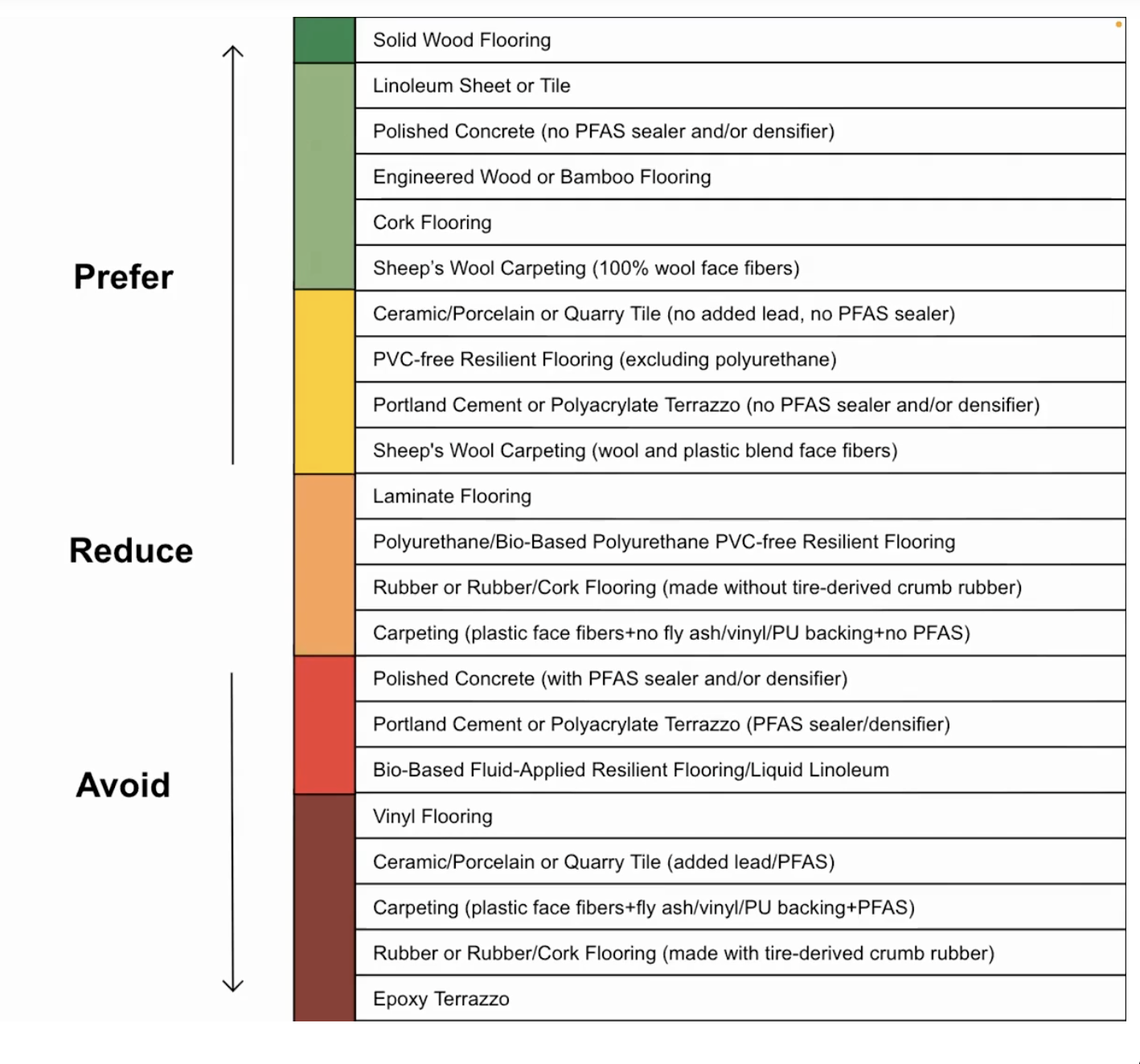
Vinyl flooring is a material to avoid.
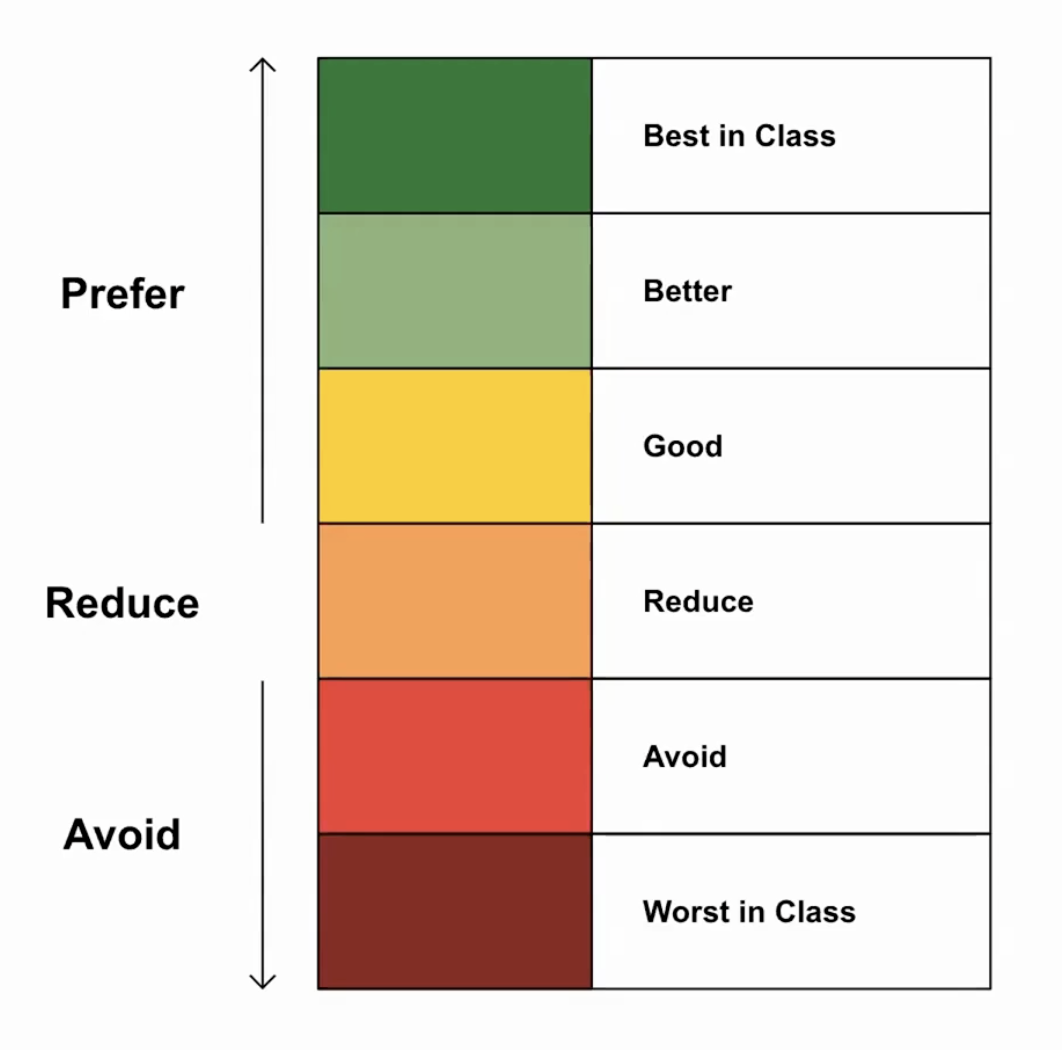
The diagram below, was created by Informed (Diagram below) “represents decades of comprehensive research on the health impacts of chemicals throughout the product life cycle.”
When discussing whether vinyl flooring is “toxic,” it’s important to distinguish between the PVC polymer itself and the chemical additives used to make flooring flexible, durable, and marketable. Most health concerns arise from the additives and lifecycle impacts rather than from the finished PVC alone.
This is where the conversation must shift.
The building industry has historically prioritized first-cost decision-making—what is cheapest to install today—rather than lifecycle value, which accounts for long-term human health, operational costs, and societal impact. When we choose lower-cost materials that may compromise indoor environmental quality, we are not eliminating costs—we are simply externalizing them to occupants, public health systems, and future remediation efforts. In other words, the savings gained upfront are often offset—and sometimes exceeded—by downstream consequences.
Putting health and wellbeing before short-term financial gains is not just an ethical stance; it is a more accurate and responsible economic model. Healthy materials and better indoor environments support higher occupant satisfaction, improved cognitive function, and long-term resilience, all of which are increasingly recognized as drivers of value in real estate and community development. In a warming climate, where buildings are becoming more tightly sealed and people spend upwards of 90% of their time indoors, the quality of indoor environments is no longer a secondary concern—it is foundational.
For firms like a peaceful space inc, this represents both a responsibility and an opportunity to help our clients and the industry reframe decision-making around true cost, true performance, and true impact.
Informed's Flooring Scorecard
Sidebar
By integrating health-based metrics—like Informed’s Flooring Scorecard—into project planning, we are not asking clients to spend more; we are helping them invest more wisely. The future of building is not just about what we can afford to construct, but what we can afford to live with.