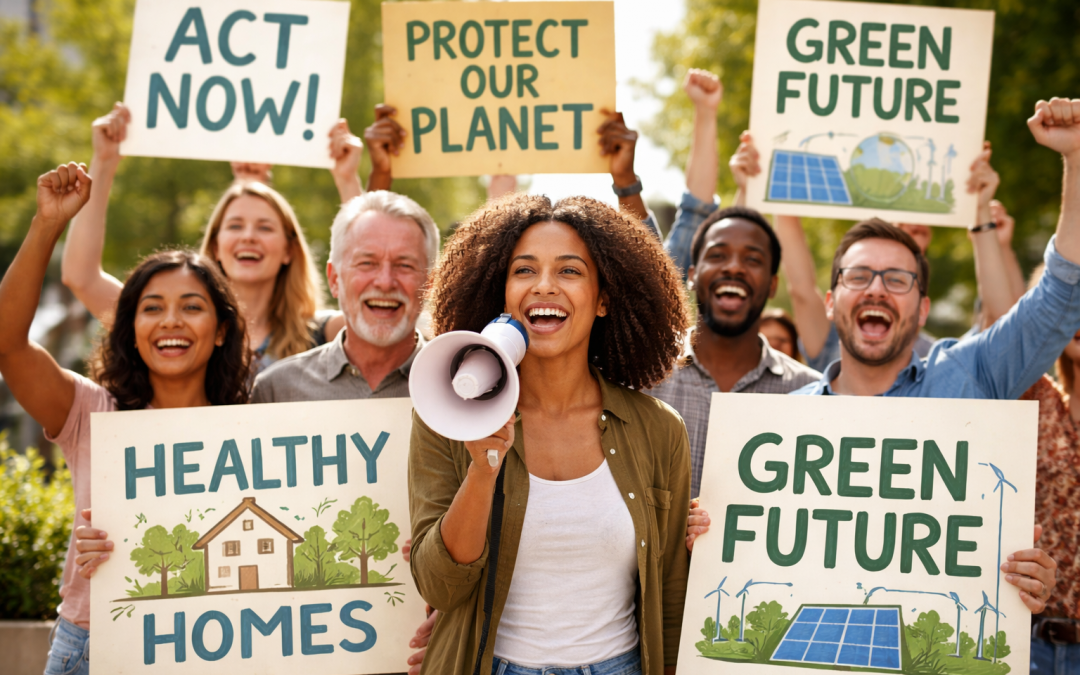
For decades, we have defined wellness primarily through personal choices—eat healthier, exercise more, manage stress, and get enough sleep. While these habits matter, they tell only part of the story. Wellness is also shaped by the environments where we live, work, learn, and age. The quality of the air we breathe, the materials that surround us, the temperatures we endure, the neighborhoods we inhabit, and the access we have to nature all influence our physical, mental, and emotional health.
If we truly believe that health is a human right, then wellness must become an act of advocacy.
The Missing Conversation
Most people spend nearly 90 percent of their time indoors, yet we devote remarkably little attention to the health performance of our homes and buildings. We routinely inspect buildings for structural integrity, energy efficiency, and code compliance, but rarely ask whether they actively support human health.
Questions such as these should become commonplace:
-
- Is the indoor air contributing to respiratory illness?
- Are building materials introducing harmful chemicals into daily life?
- Does natural light support healthy sleep and productivity?
- Is excessive noise increasing stress?
- Is the home resilient during extreme heat or poor outdoor air quality?
These are not only lifestyle concerns—they are public health issues.
Wellness Begins Where We Spend Our Lives
The places we occupy every day function as invisible health systems. They either promote wellness or contribute to chronic disease, allergies, asthma, fatigue, poor mental health, and reduced quality of life.
Unfortunately, society has normalized unhealthy indoor environments. Mold is often ignored until it becomes severe. Poor ventilation is accepted as standard practice. Toxic materials remain common because they are inexpensive. Excessive heat is treated as unavoidable rather than preventable.
Advocating for wellness means challenging these assumptions.
It means recognizing that every decision made by architects, builders, developers, manufacturers, policymakers, and homeowners has lasting consequences for human health.
Wellness Requires Collective Responsibility
Too often, wellness is framed as an individual responsibility. Yet many health outcomes are influenced by factors beyond personal control.
Families cannot choose cleaner indoor air if affordable housing is built with low-quality materials. Workers cannot improve daylight exposure in poorly designed offices. Children cannot avoid overheating in schools without adequate cooling or shade.
This is why advocacy matters.
Creating healthier environments requires collaboration among:
-
- Public health professionals
- Building designers
- Local governments
- Healthcare providers
- Community organizations
- Environmental scientists
- Developers
- Homeowners
Healthy Buildings Are Public Health Infrastructure
When advocating for healthy buildings, buildings are not viewed solely as financial assets or physical structures but as investments in human capital. When we invest in healthier buildings, we invest in healthier people.
Research consistently links healthier indoor environments with:
-
- Better respiratory health
- Improved cognitive performance
- Reduced absenteeism
- Better sleep quality
- Lower stress levels
- Greater workplace productivity
- Improved educational outcomes
- Increased resilience during climate events
Advocacy Means Asking Better Questions
Real change begins with curiosity.
Instead of asking:
“How much will this project cost?”
We should also ask:
“How will this project improve health?”
Instead of asking:
“Is this building code compliant?”
We should ask:
“Is this building supporting human wellbeing?”
Instead of asking:
“How quickly can we build?”
We should ask:
“How well will people live here twenty years from now?”
These questions shift the conversation from minimum standards toward meaningful outcomes.
From Awareness to Action
Advocating for wellness is about transforming knowledge into measurable change.
That means:
- Conducting healthy home assessments.
- Promoting evidence-based building certifications.
- Educating communities about indoor environmental quality.
- Encouraging healthier building materials.
- Designing neighborhoods that support physical activity and social connection.
- Prioritizing resilience alongside sustainability.
- Giving residents the tools to understand how their environments affect their health.
Advocacy is not limited to policy. Every conversation, every assessment, every project, and every informed decision contributes to a healthier future.
Wellness Is an Investment in Our Future
As climate change, urban growth, housing affordability, and chronic disease continue to shape our communities, wellness can no longer be viewed as an optional amenity reserved for luxury developments. It must become a foundational principle of how we design, build, renovate, and maintain the places where people spend their lives.
The healthiest communities are not created by chance. They are built through intentional choices, informed leadership, and persistent advocacy.
Wellness is not something we simply pursue for ourselves—it is something we create together.
The future of public health depends not only on hospitals and healthcare systems, but also on the homes we build, the workplaces we design, the schools we improve, and the communities we shape.
Advocating for wellness means recognizing that every healthy space has the power to improve a life. And that is a future worth building.